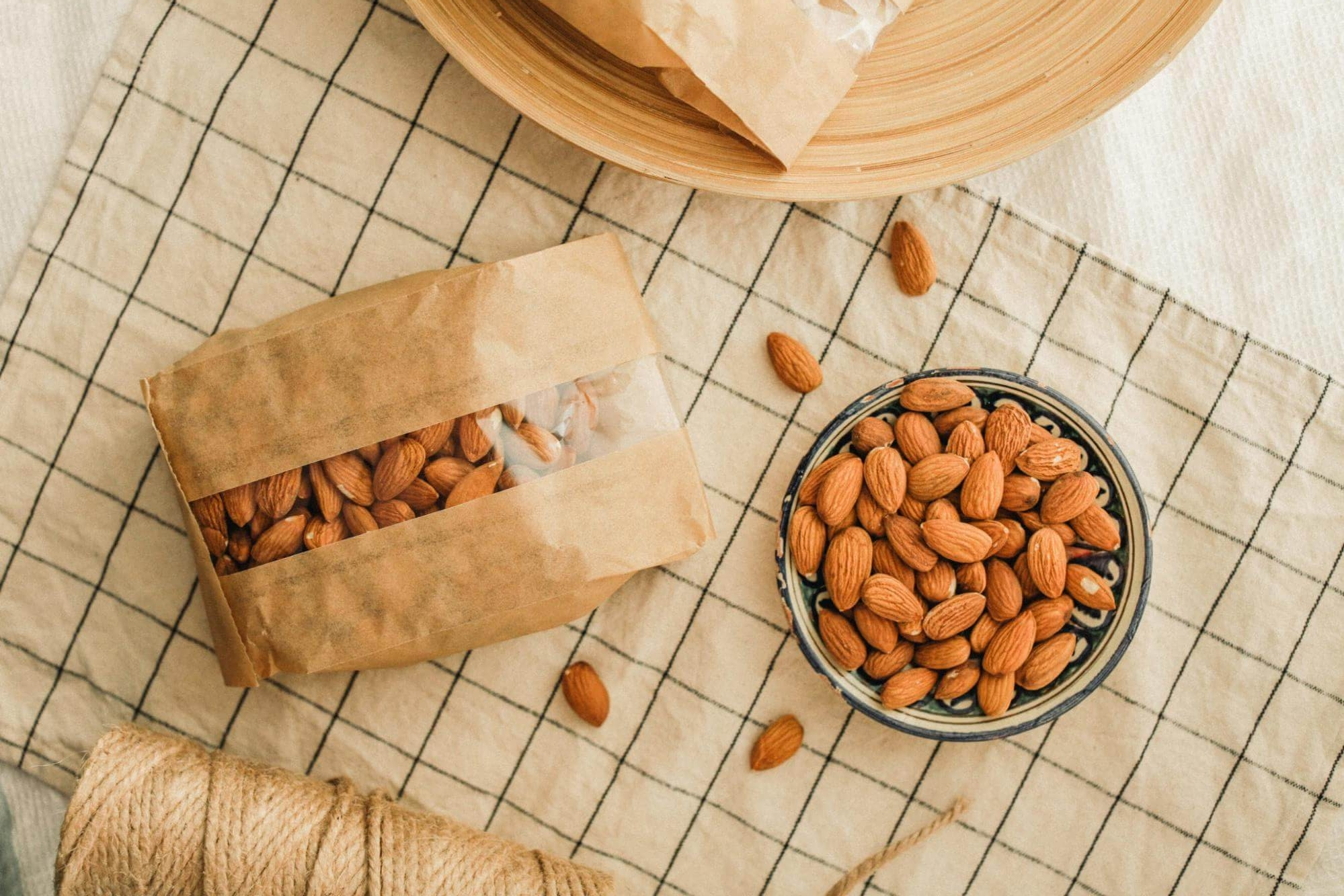
Eco-trends came to Ukraine from the West. There they started gaining popularity since the late 60s. The fashion for “Eco” and “Organic” is growing fastest in Western Europe, North America, Australia and New Zealand. The global capacity of the organic market is up to 60 billion dollars. In Ukraine, the heyday of eco-trends came in the 2010s, the market capacity is still insignificant. It is mainly growing due to the category of agricultural products: dairy, meat and cereals.
In 2017, the organic segment of the global market is developing most dynamically, compared to other segments. For example, in the U.S. 40% of the population choose organic products. The agricultural area used for Ukrainian organic production is 270 thousand hectares.

Eco-products: pros and cons
In order to receive the coveted sticker you must be certified. For this purpose, the products must be 95% organic and only organic fertilizers must be used in their production.
It is important that organics have both pros and cons. On the one hand, these are products without dyes, preservatives, antibiotics (for meat) and not treated with chemical fertilizers. On the other hand, this way of production is extensive. There is a movement in Europe that advocates the rejection of organic methods, and it has reasons for this.
A study conducted by scientists commissioned by the Danish government has shown that if the entire country is converted to organics, crop yields will drop by 47%. And in order to fertilize the land with organic fertilizers, it will be necessary to reduce by 30% the areas that are now given to cereals. There are also research-proven facts that organic production leads to increased hunger and greenhouse gas emissions.
Despite these disadvantages, organic goods are very popular. Their reputation is much better than genetically modified products, which have long been in disgrace, although they can save the planet from hunger. Some producers are engaged in the production of organic products for ideological reasons: they sincerely believe that modern technology makes products worse, while organic is useful and natural.

Other manufacturers have simply gone with the flow and utilize eco-motifs without resorting to organic production techniques. These motifs are reflected in:
- on packaging and in advertising;
- the markings on the package;
- marketing positioning;
- packaging materials.
Some large enterprises added one or more certified items to their wide assortment. For example, in May 2015, Zhytomyr Butter Plant PJSC – Rud Company introduced a new ice cream to the market – Eskimos-organic. At the same time, the brand’s arsenal already included the Eskimos line, which was positioned as a natural ice cream born from childhood.

The situation is similar for Kozub Produkt, which produces cereals, macaroni and cheese. In addition to ordinary products under the brand name “Kozub”, the company has established production of organic cereals, having passed European certification. The appearance of the two lines is very different from each other.

Eco-trends and legislation in the sphere of organic production
It is worth understanding the terminology. Now on Ukrainian goods you can find 4 marks – “organic”, “eco”, “bio” and “natural”. All of them do not mean anything if it is not a mark, which manufacturers receive by passing certification in a special body. Most of all goods in Ukraine are certified in accordance with the EU norms. producers get it in order to export goods to Europe. Today about 10% of goods are exported to the EU. The mark of such a certificate is a sheet of stars on a green background.
There are also national markings – a hexagon with the inscription “Bio” (Germany), a green circle with a palm (Italy), a square logo with the abbreviation AB (France). There are also 2 other international marks. The mark of “Demeter”, an organization whose requirements are higher than the EU certificate, and “Fairtrade”, whose certificate confirms that no child or slave labor was used in production.

Producers of certified organics are not satisfied with the fact that the prefixes “Eco” and “natural” are used by everyone. In 2014, they lobbied for the adoption of a law that restricts the use of these terms without a certificate. However, the law is still unclear on the mechanism of prohibition, which leaves unscrupulous companies room to maneuver. Organic producers believe that when the law will work, some of the goods will remove their illegal marks. Some will choose to undergo certification (the cost of the service in the Ukrainian Center starts from 6 thousand hryvnia) in one of the 15 certified centers that can audit and confirm the quality of products and the purity of the land. Others will be forced to be honest with consumers and remove “eco” marks from packages.
How to recognize an organic product (with EU certificate)
Also, at the end of 2015, the law on the Ukrainian symbol of organic goods was adopted. Its presentation took place in February 2016, but it has not yet appeared on the goods. Firstly, there are still lacking some bylaws that regulate its use. Secondly, there is still little knowledge about it, and the European symbol is already a recognizable mark. Therefore, it is better for manufacturers to use it. In June 2017, the Ministry of Agrarian Policy reported that Ukrpatent registered the logo. This means that the mark will soon appear on Ukrainian goods. It is likely that companies will not remove the European certification mark, but will simply add a new logo to the packaging.

Ukrainian approved logo
Requirements for eco-products and Ukrainian eco-brands
As we have already written above, many producers use the prefixes “eco”, “natural”, “bio” and “organic” only as part of their marketing strategy. For example, the France.ua chain decorated its envelopes and paper bags for croissants and panini with the label “eco” (above the logo). No information about certification could be found on their website, and according to the 2014 law, such a mark is illegal (only “organic” can be used, if there is a certificate).
Read also: Mastering new markets: how to please the European consumer
Another example is Eco Snail, a company producing delicacies – grape snail. It is the first enterprise of the segment in Ukraine, which has been operating since 2009. In marketing, “Eco Ulitka” emphasizes production in an ecologically clean area. However, the business owner says that there is no certificate yet, and he is not going to get one in the near future, because sales are going well without it.
Screenshot from the official website of Eco Snail

However, there are some companies that received their marks absolutely legally, having confirmed the origin of their products. These include a line of dairy products Organic Milk, flour producer Khlibio, agricultural enterprise EthnoProduct, and tea brand MOL’FAR. Retailers have also joined the movement.
For example, Sielpo and Good Wine have divisions that deal with organics. They are looking for Ukrainian producers of organic goods and
negotiate supplies to their chains. In “Sylpo” they can be found in the zones “Lavka Traditsii”, and in “Good wine” they invented their own mark (green circle with a bird), which helps consumers to find organics on the shelf. The chain also holds fairs where you can buy fruit directly from the producers.
The Eco-Lavka network, where you can find Ukrainian “eco-goods”, is popular. However, not all manufacturers that are presented on the shelves of this brand have certificates.

Target audience of eco-products
The price segment of organic goods is above average. They are preferred by people with high income who live in large cities (Kyiv, Kharkiv, Odessa, Lviv). The age group is 35+. There are fewer consumers among young people. Vegetarians, vegans and cheese-eaters prefer organics. People who choose organic are concerned about their own health and the future of the planet. They choose conscious consumption and try to minimize harm to the environment. For these people, eco-friendly product packaging is important.
Read also: Overview of the Ukrainian market of fruit-based natural sweets in 2016
Eco-packaging for products: design and materials
Those producers who produce quality products, but do not see the point in switching to organic farming methods, can introduce “eco” into their image with the help of packaging design.This direction is called “design eco-style”. Its main tools are:
- natural packaging materials (cardboard, glass, kraft paper);
- packaging made of biodegradable polymers (labeled as such);
- natural color palette with a predominance of white, green and brown;
- Illustrations in the style of pencil sketches and watercolor drawings;
- handwritten fonts;
- variations on the green theme.
Below are some examples of Ukrainian and foreign packaging in the “eco” style.

Gastronaut ice cream packaging design, USA

Nancy’s Fancy ice cream packaging design, USA

CARPOS olive oil packaging design, UK

Humboldt’s Finest vodka label design, USA

Packaging design of Biossance care cosmetics
You can order eco-packaging design for products in KOLORO. Marketers and designers will find a solution for your product.
Eco-trends in Ukraine: results
Today, organics in Ukraine is just beginning to develop. In Europe, it has already reached its peak, and 10 percent of all food products on the shelves of European stores are certified organic. In Ukraine this figure is about 1%. The development of the industry is mainly due to premium segment products, designed for the audience of big cities with an above-average income. Such products can be found in hypermarkets on special shelves.
Interestingly, there is a demand for Ukrainian organic products in Europe. And now, because producers realize that prices in the European market are higher, they raise prices in the domestic market. This significantly increases the cost of products in retail. And therefore, it limits the range of CA products, cutting off the opportunity for some consumers to buy organic.
If you want to start a business in this field, contact KOLORO. We will analyze the organic market and help you develop a strategy for launching and promoting your brand.