Website design: the primary stage of resource creation
Website design is the thoughtful modeling of an effective online resource. This is the primary stage in the development of the site and it is responsible for the adequacy of further development. When designing a website, the idea of the site is developed, its goals and objectives are defined, as well as ways to achieve them. At the end of the design phase, developers have a clear idea of how the completed project will look and work.
YOU GET

Make changes before it’s too late

Saves you money and our development time

Guaranteeing the achievement of expected results

Ability to assess whether the future site meets your expectations
Make changes before it’s too late
Saves you money and our development time
Guaranteeing the achievement of expected results
Ability to assess whether the future site meets your expectations
Make changes before it’s too late
Saves you money and our development time
Cost of website design
In the studio KOLORO you can order the design of the site or order a turnkey site, then the cost of design to go to the cost of site development. To specify the price, please contact our manager +38 044 223 51 20, hi@koloro.ua.
Why you need to design a user interface
The design stage of the site is often ignored and go straight to the creation of the site. Is it okay to do that? You can. Do we do that? No, we don’t. Design helps us optimize the development process and distribute work efficiently. Since design, layout and programming are based on the prototype approved by the customer, it is better to make changes to the preliminary model – it is much cheaper and will save everyone time. Designing an internet site will give you:
Advantages of designing and developing a website with KOLORO
 | Turnkey developmentInKOLORO you can order the creation of a turnkey website – we will realize your ideas taking into account modern trends of UX design. |
 | Marketing analysisBeforewe start designing the user interface, we will conduct a study of the target audience of the future site. |
 | Open-minded teamOurpride is our team. KOLORO is a family of developers and marketers, where each person is receptive to new things and ready to find solutions for even the craziest ideas. |
What does the design process give the site?
- Increases the likelihood of achieving the desired type of resource. A clear mission statement, defining CA and modeling user paths can get the desired outcome from the design.
- Saves time and finances. Fixing inaccuracies during the prototyping of the site is not a difficult process, it is enough to change a few text or graphic fragments. It will be much longer and more expensive to do this at the layout stage. And for a programmer, such fixes will be even more labor-intensive.
- Logically divides up the work. A website prototype is an independent document on the basis of which the customer can already create a website, either by himself or by another development team.
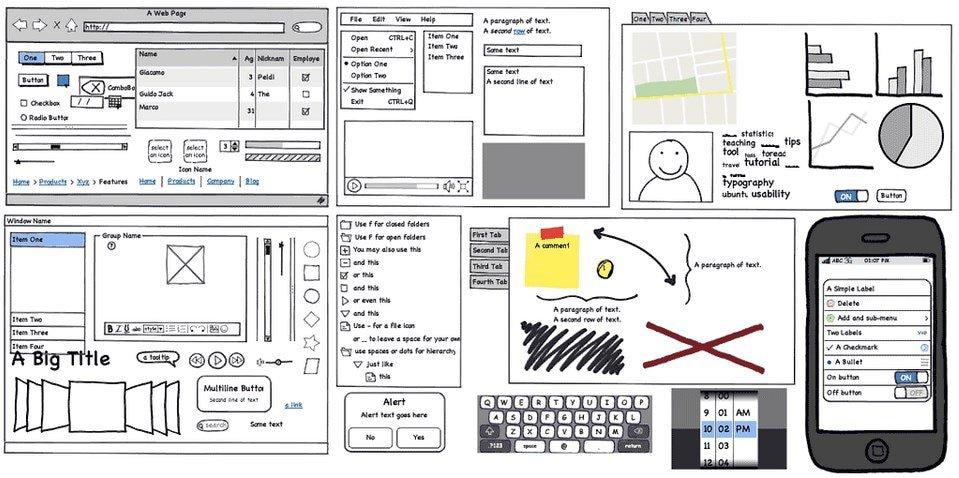
4 phases of website design
The website design process can be divided into 4 stages.
1. Creating the concept of the site
At the stage of site concept development it is necessary to form an ideological base and agree on the direction of development with the client. Developing a site idea provides feedback on whether you and the development team have a unified vision of the project (whether this is the kind of site you need). The resulting concept should accurately answer the question of whether it is the best solution to the tasks at hand. We also take into account the emotional response of the target users.

The sum total of the concept should answer such queries:
- resource objectives;
- target audience;
- site functionality;
- core content of the resource;
- ways to make money on the site;
- positioning and unique characteristics of the resource;
- mechanisms of post-launch development.
2. Designing the structure of the site
Loyalty depends largely on how well the design of the new site’s graphical interface matches the users’ mental model – their expectations. Therefore, it is necessary to establish such an order of arrangement of pages of the site relative to each other, so that this structure was intuitively understandable to users. Developing the structure of a website involves two levels: internal and external. The internal structure defines the logical connection between pages and depends on UX design engineering. It is also determined by the external structure (site navigation).
Also at this stage the information structure is developed, i.e. the scheme of resource sections and navigation. The section layout ideally includes the following elements: tasks, pieces of functionality, and user behavior options.
3. UI interface design: designing a website design
Creative web site design provides a pleasant and simple human-machine interaction experience. The UI designer builds on the UX designer’s recommendations, trying to maximize the ease of building a website experience. At this stage, emotional response plays a major role in deciding in favor of a particular design. At the same time, we are not based on our subjective feelings, but on the analysis of the target audience of the site.

4. Done: terms of reference for website development
The result of design and interface design is a detailed terms of reference for the development of the Internet site, accompanied by references and mock-ups. Why is this so important? Designing the structure and interface of the future site is not only an outline of the future design. It is a careful planning of a system that will be successful and user and search engine friendly.
It’s logical to put in the TOR:
- software requirements;
- Technology requirements for specific tasks;
- design requirements, or artistic design;
- anticipated loads.
In essence, the TOR answers all the questions for the website developer. This is a fairly lengthy document describing the future operation and appearance of the system. The TOR must be approved by the customer and it remains unchanged until the final development.
Features of website design
- During the development of the site prototype, it is important to adhere to a uniform style of design elements.
- In order to make a prototype of the site must develop its structure, where clearly indicate the hierarchy of blocks, sections and sub-sections.
- It is not recommended to create similar pages, if it is possible to place the same information on one page. Let’s take an example: contacts are placed either in the section about the company or in the footer of the page, so it simply does not make sense to allocate a page for them.
- If the functionality of one block duplicates the functionality of another, it is better to remove it, because repetitions confuse resource users.
- When prototyping a website, it is important to designate the user’s path to the most important sections of the site.
- Prototyping a website involves creating an outline of the main pages with their prioritization. For example, if the company does not plan to post news frequently, it makes no sense to layout a separate page for them

With the service of design and development of the site order:
Post facto: prototyping the site
Based on the terms of reference, we move on to prototyping the site – the next stage of development.
Promotion: marketing for your website
Depending on your expectations, we build a marketing strategy (SMM, e-mail distribution, content filling).
Website branding
Developing a unique corporate identity for a company is the key to brand recognition online.
Site filling
We can create quality and SEO-optimized content that is useful to the user and relevant for promotion.
Site refinement
Means making minor or global edits to a resource at the request of the client firm.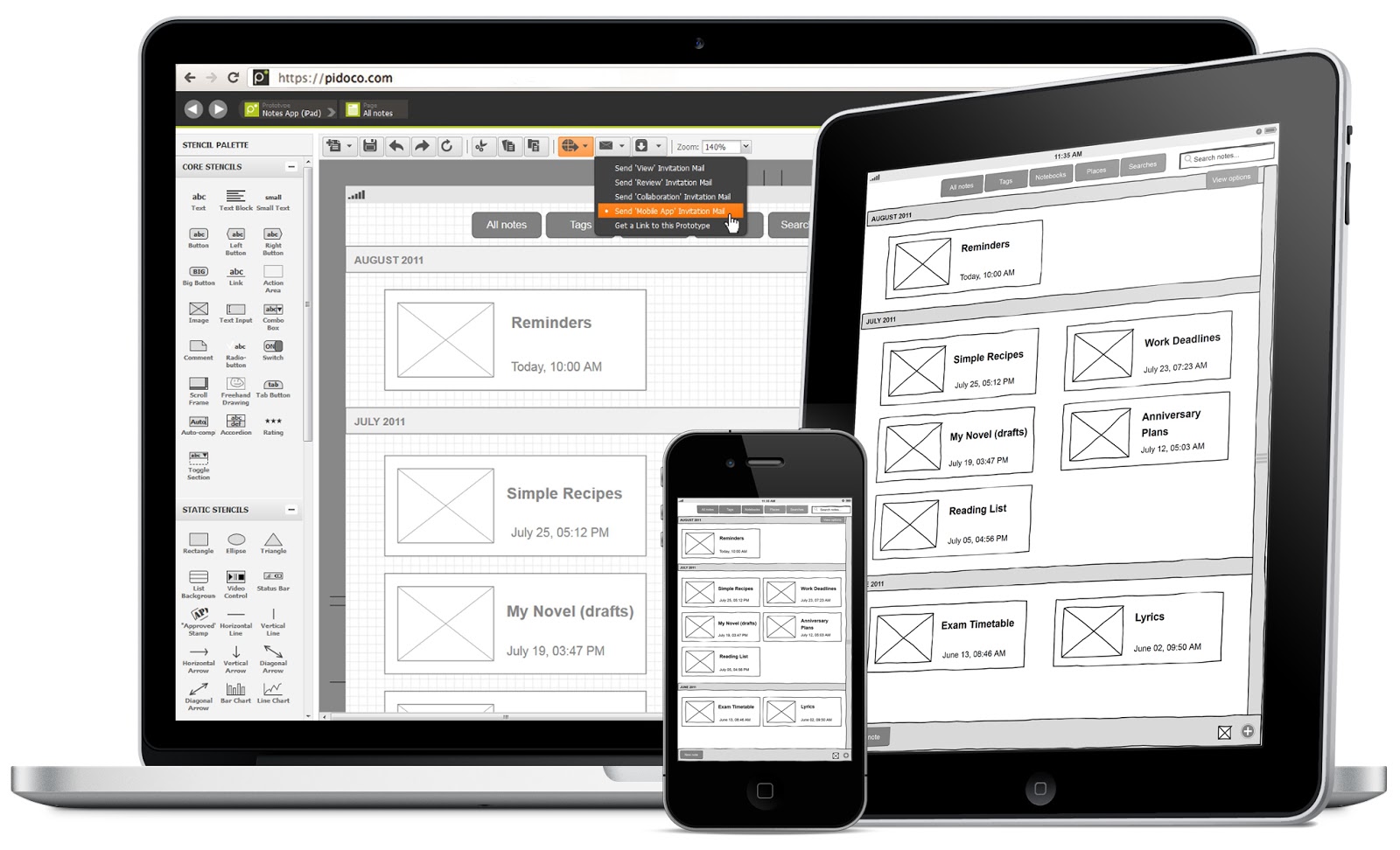
Adaptive design
It implies the development of a site with the same display of resource pages on the screen of any gadget.
Corporate identity development
Represents the creation of a logo, brandbook, business card, booklet, branded materials and even an e-mail newsletter template.
What do you get when you order website design?
- The permanent effect of a one-time event. A resource after quality design may require only minimal rework.
- Pre-prototyping will guarantee that the site’s objectives are achieved.
- Designing will significantly save time and money on website development, allowing you to invest those funds in promoting and optimizing your internet business.
The main result of the design is a working and ready to promote website. The KOLORO team knows how to make your project a success!